Investing in Poland’s Private and Real Assets: A Practical Guide for Luxembourg Funds

6 May 2026

Investing in Poland’s Private and Real Assets: A Practical Guide for Luxembourg Funds

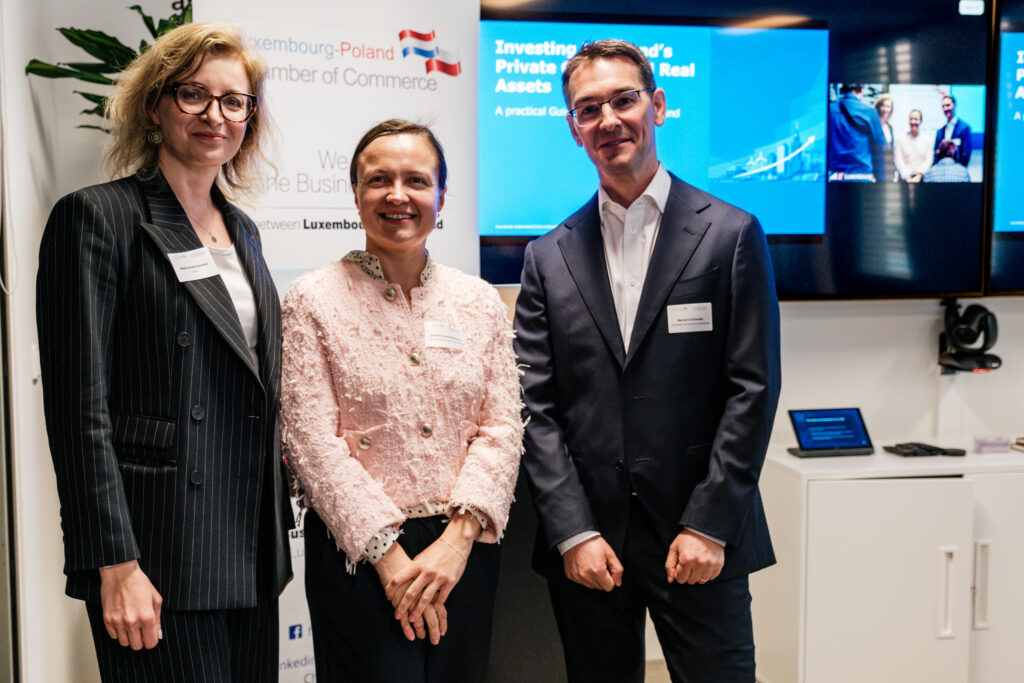
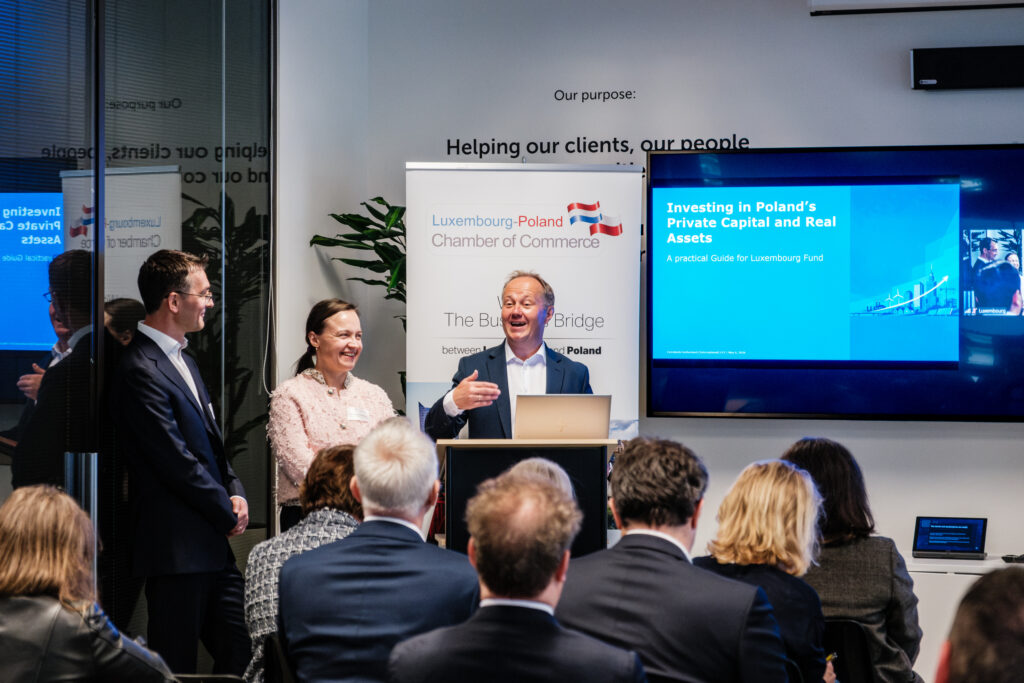
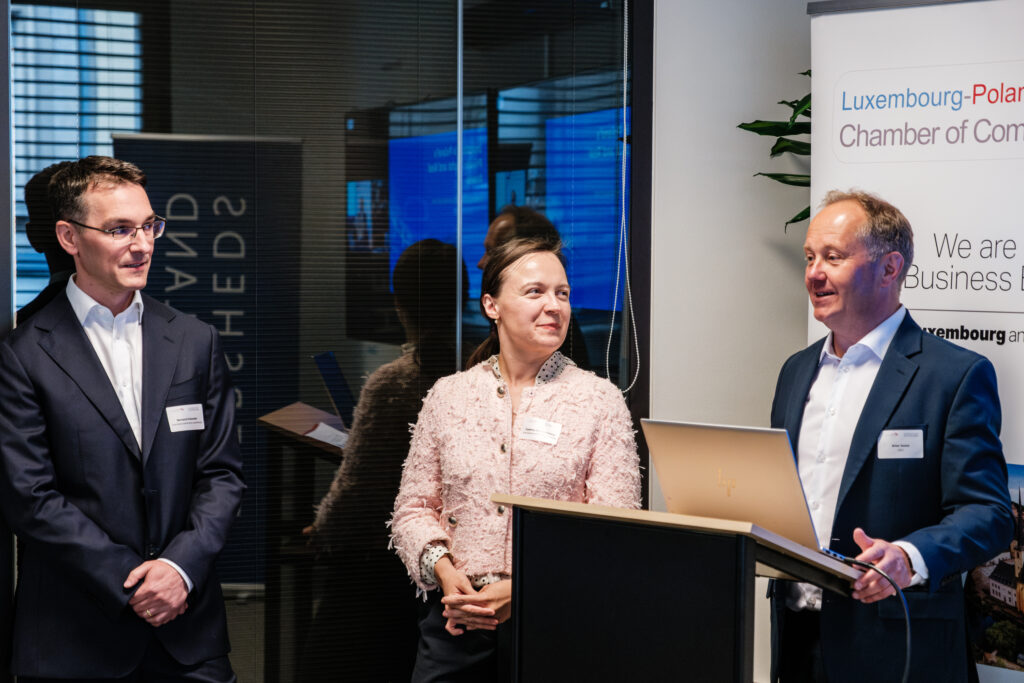
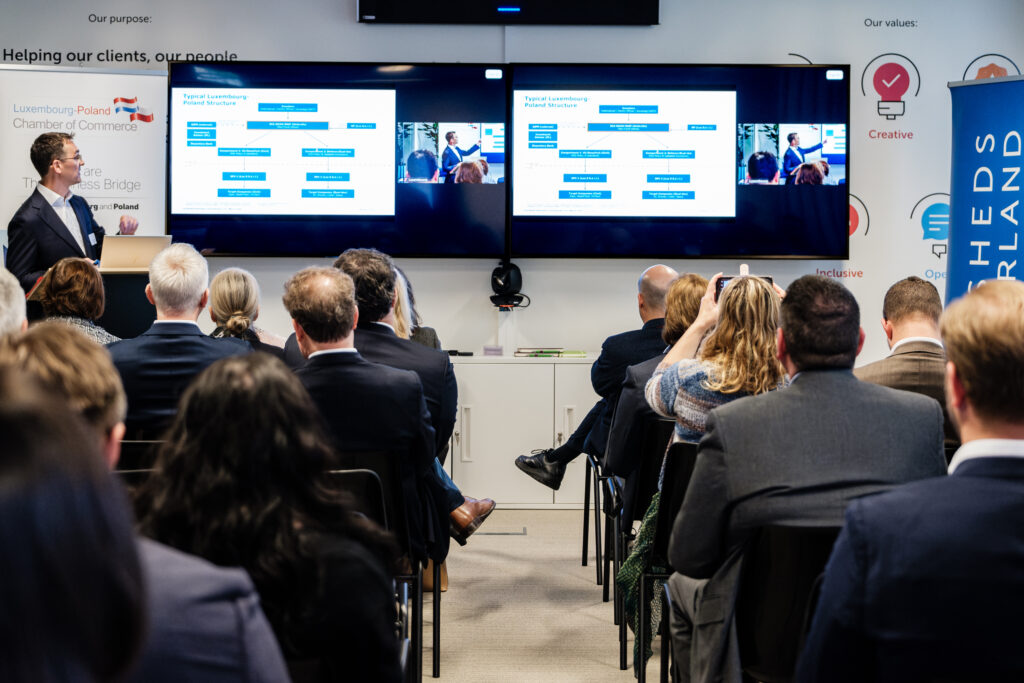
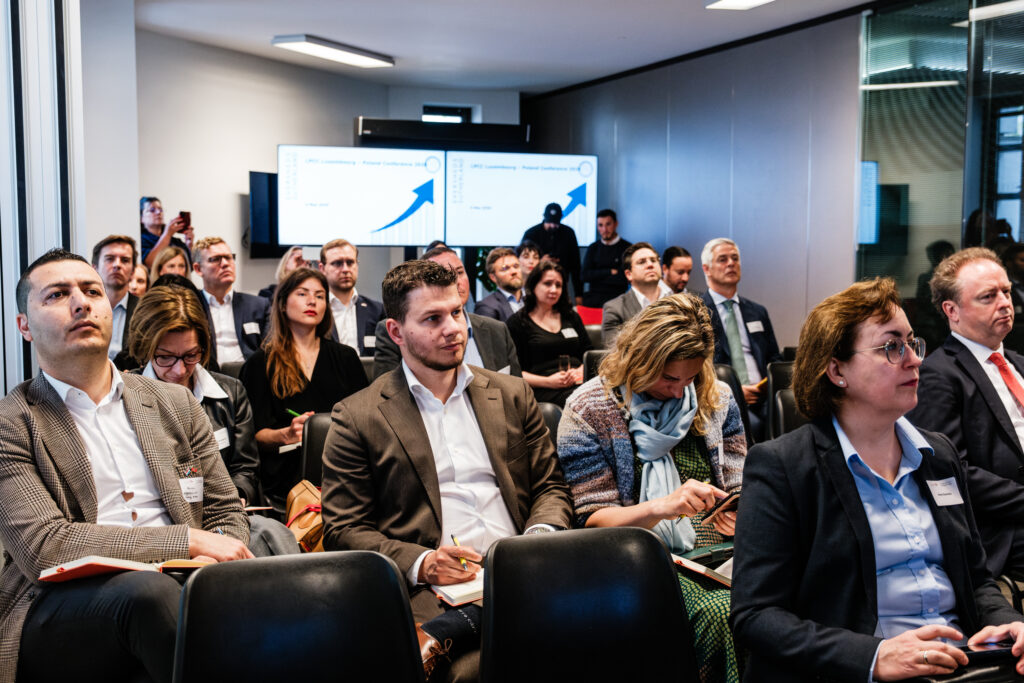
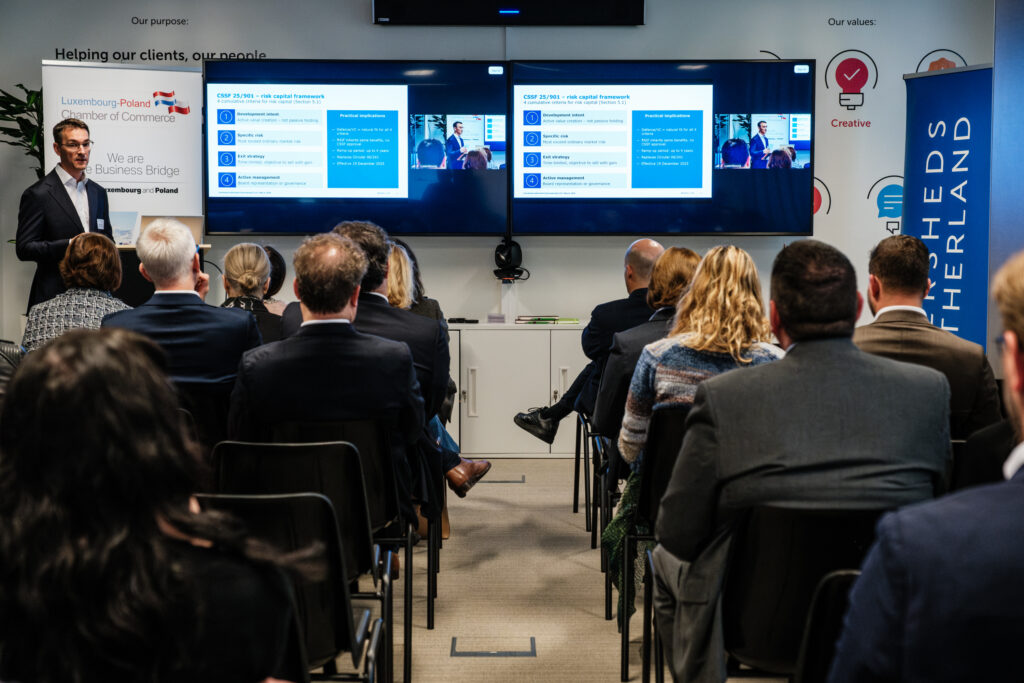
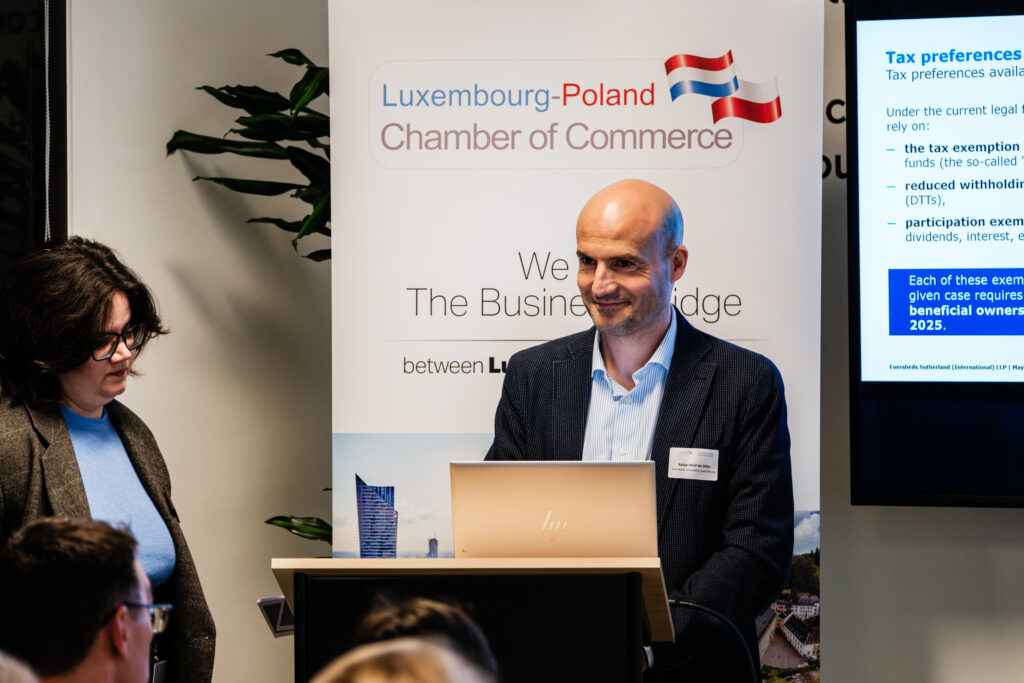
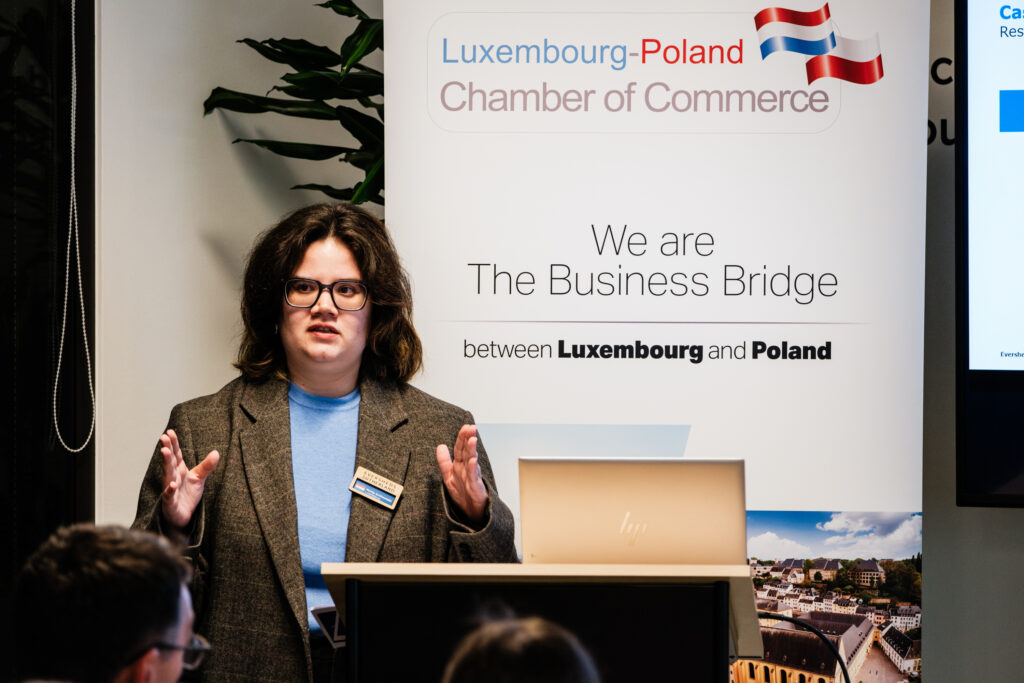
On Wednesday, 6 May 2026, the Luxembourg–Poland Chamber of Commerce (LPCC), together with Eversheds Sutherland’s cross-border teams from Luxembourg, Poland and London, hosted a practical briefing in Luxembourg dedicated to investment opportunities in Poland’s private and real assets market through Luxembourg fund structures.

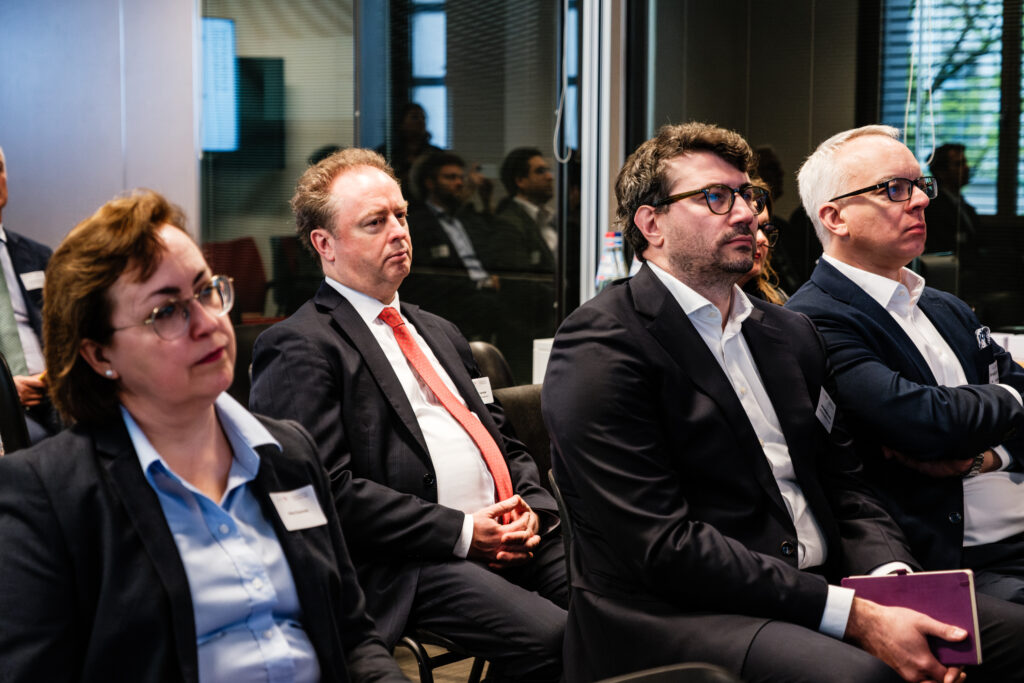
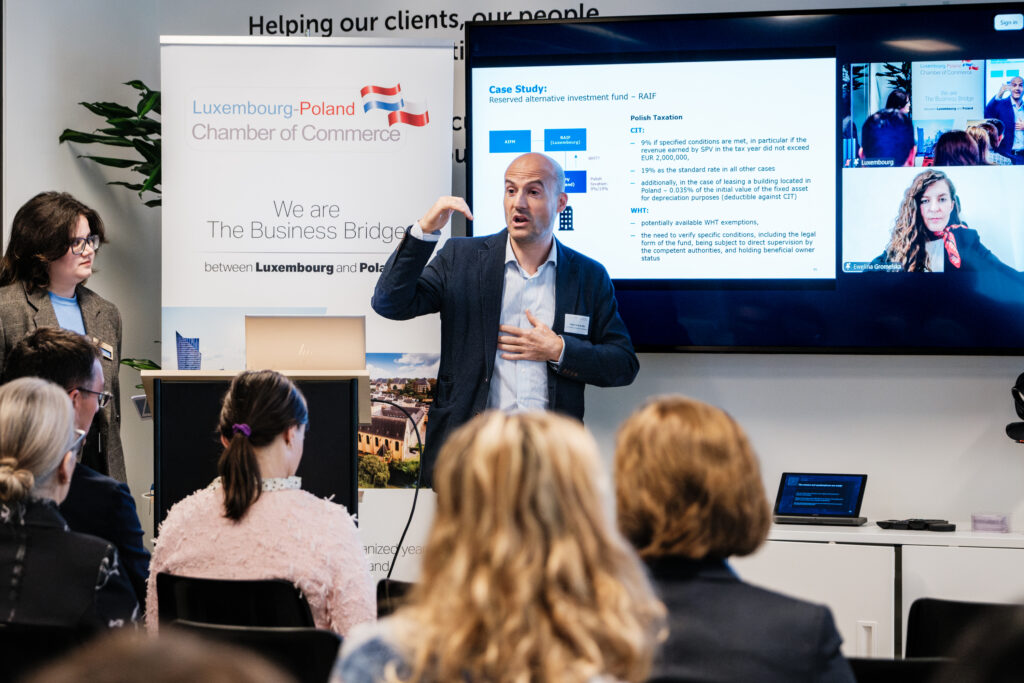
Held at the offices of Eversheds Sutherland in Luxembourg and simultaneously streamed online, the event gathered fund managers, legal and tax advisors, infrastructure and private equity professionals, as well as representatives of institutional investors interested in cross-border investment structuring and the evolving Polish regulatory landscape.

Through a series of focused expert sessions, participants explored how Luxembourg vehicles can effectively operate in Poland while investing in sectors such as infrastructure, energy, data centres, venture capital and defence-related assets.


Poland’s growing attractiveness for alternative investments

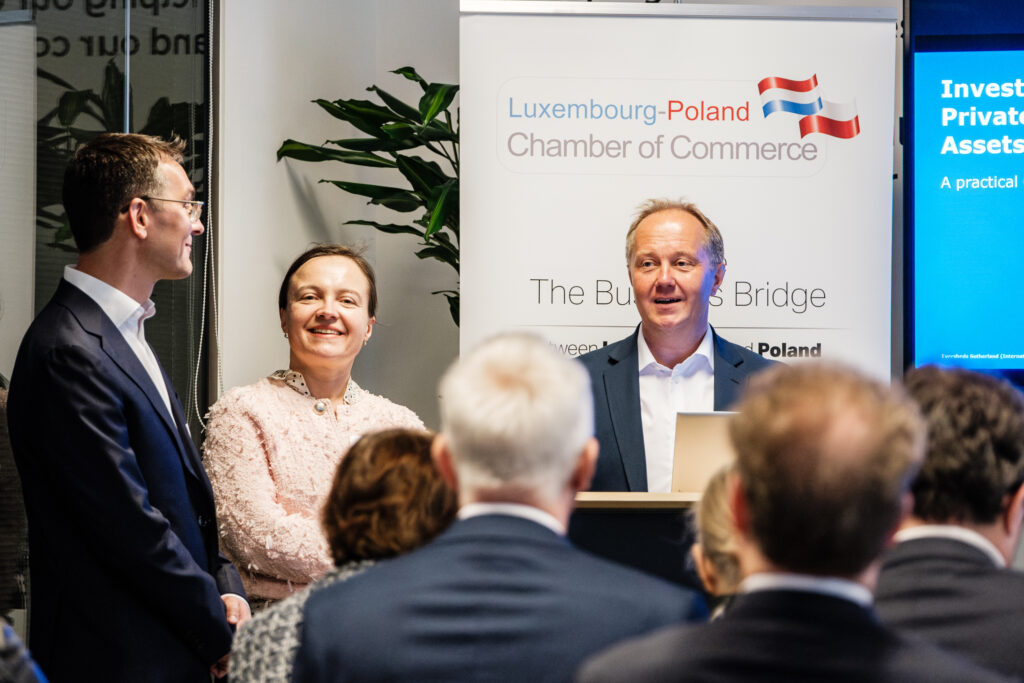
Opening the event, the speakers highlighted Poland’s continued position as one of the most dynamic investment destinations in Central and Eastern Europe, particularly in the areas of energy transition, infrastructure expansion and high-growth private assets. At the same time, they stressed that successful cross-border investments increasingly depend on combining efficient Luxembourg structuring with a clear understanding of local Polish regulatory, procurement and tax frameworks.

Private Assets: VC & Defence Investment

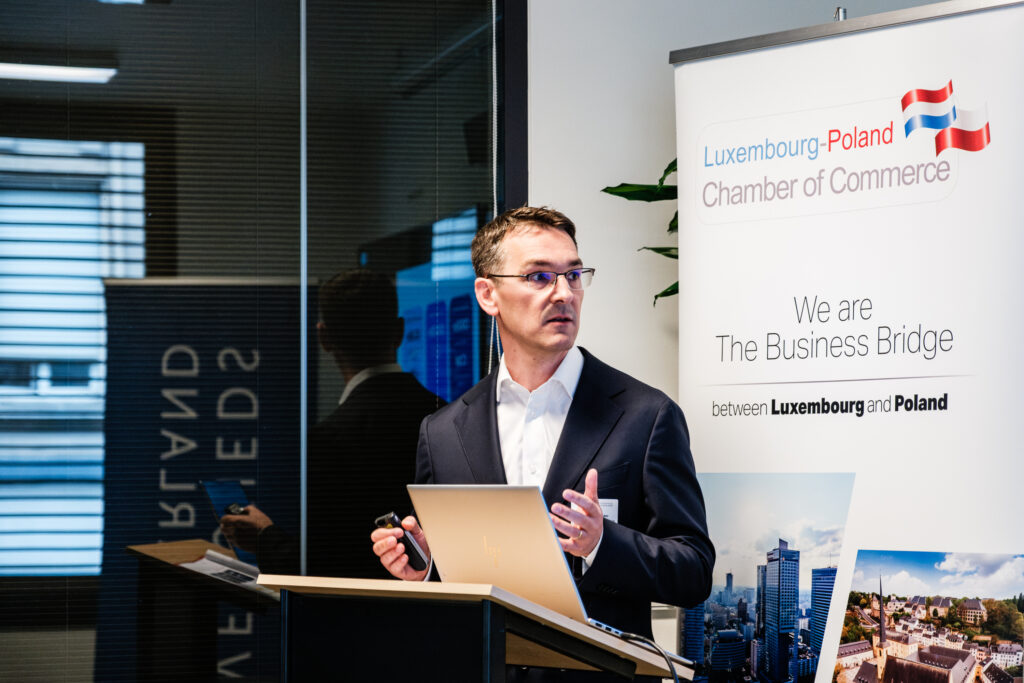
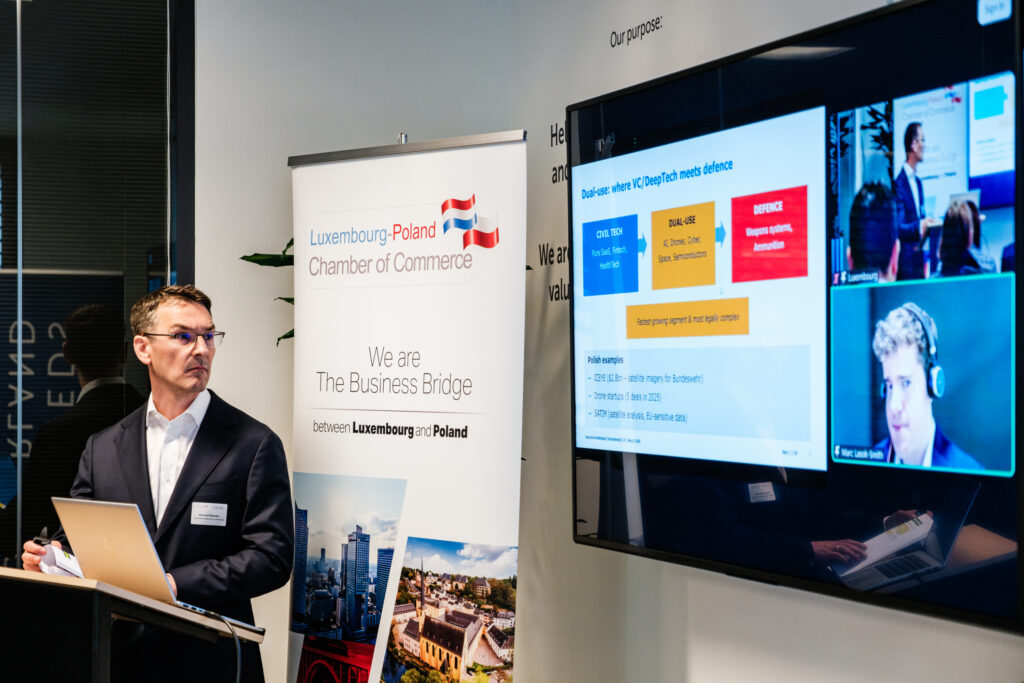
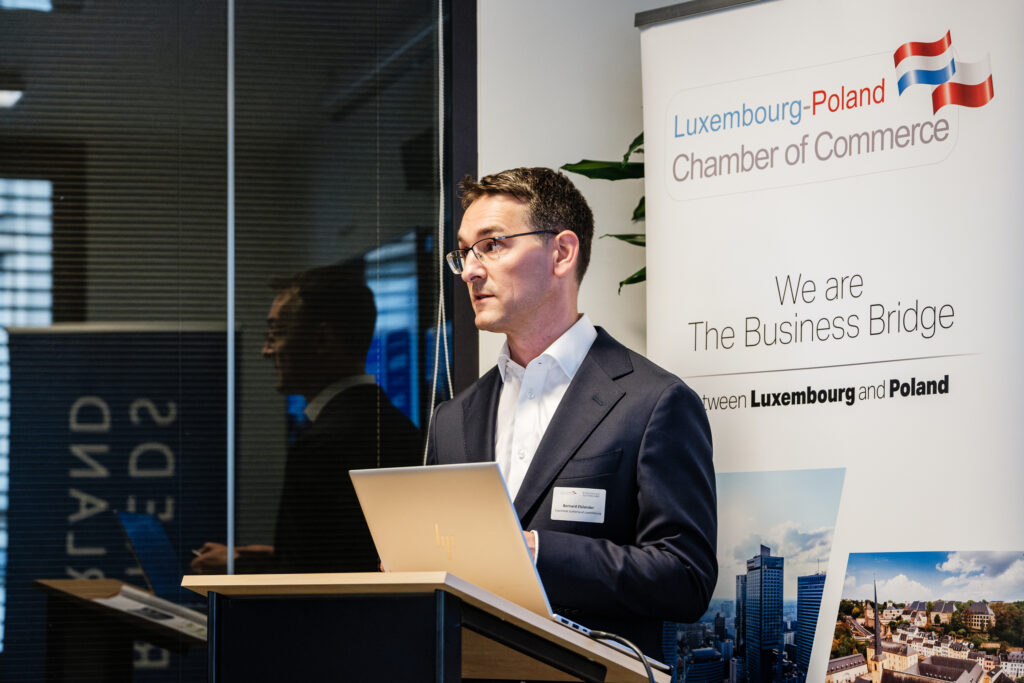
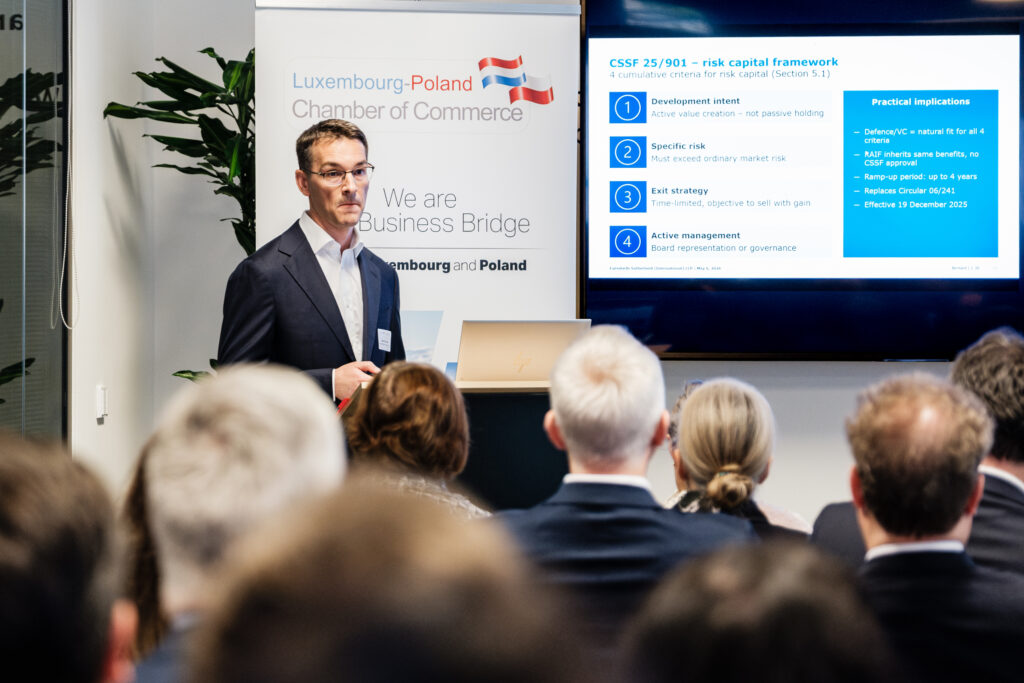
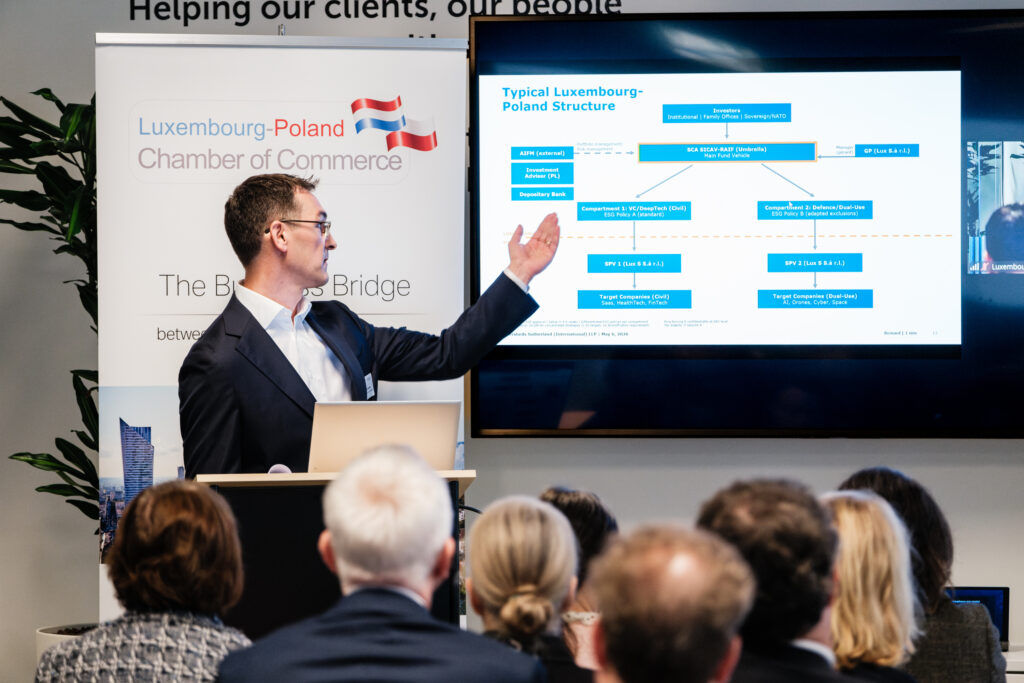
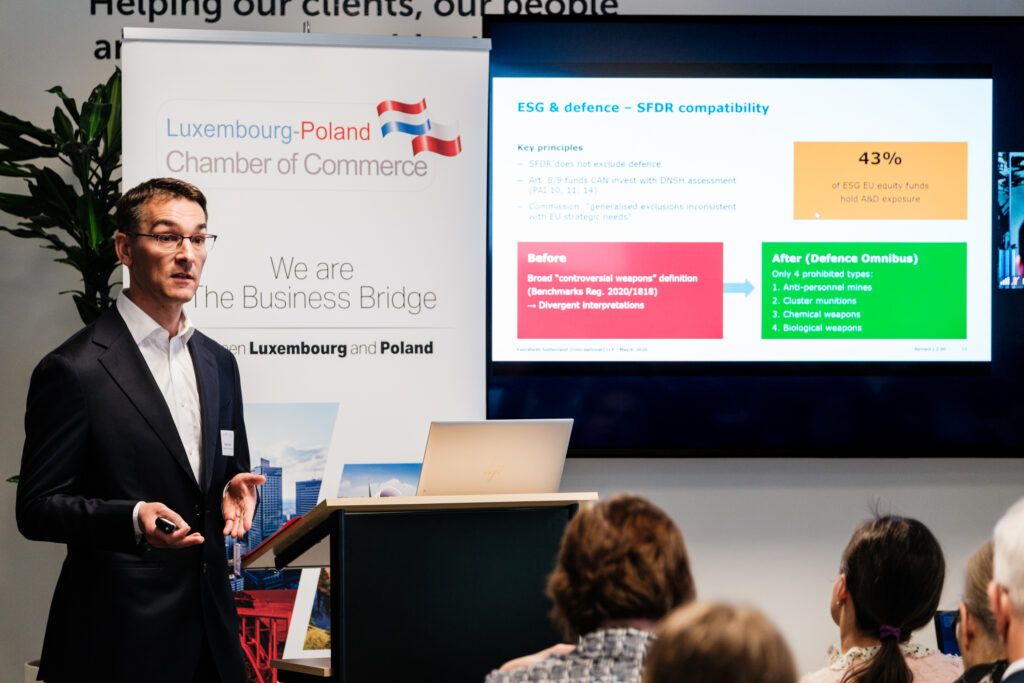
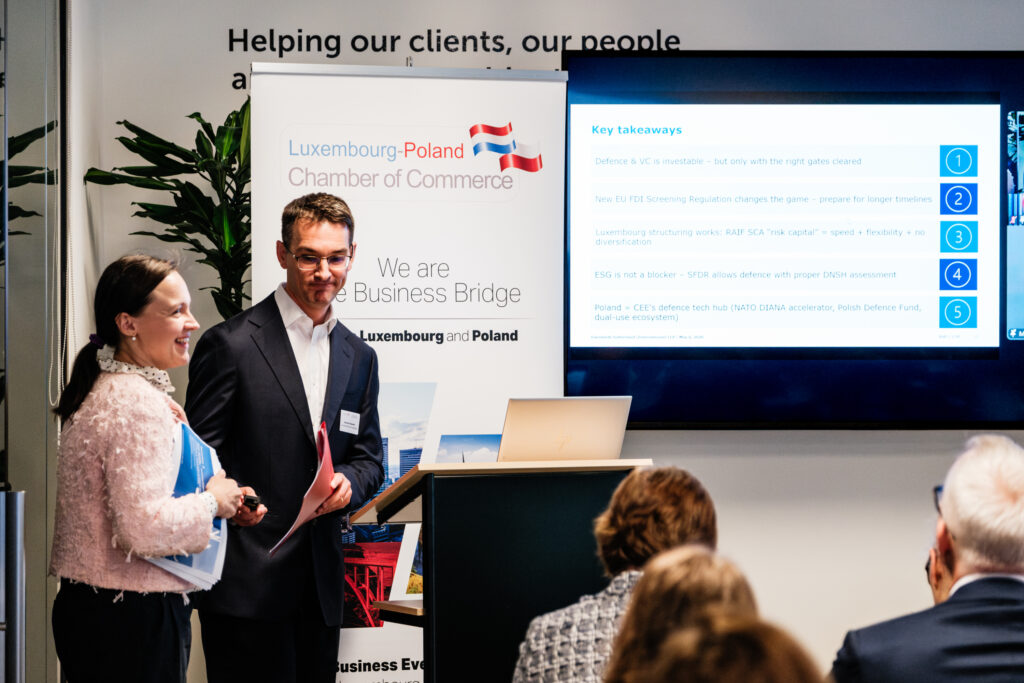
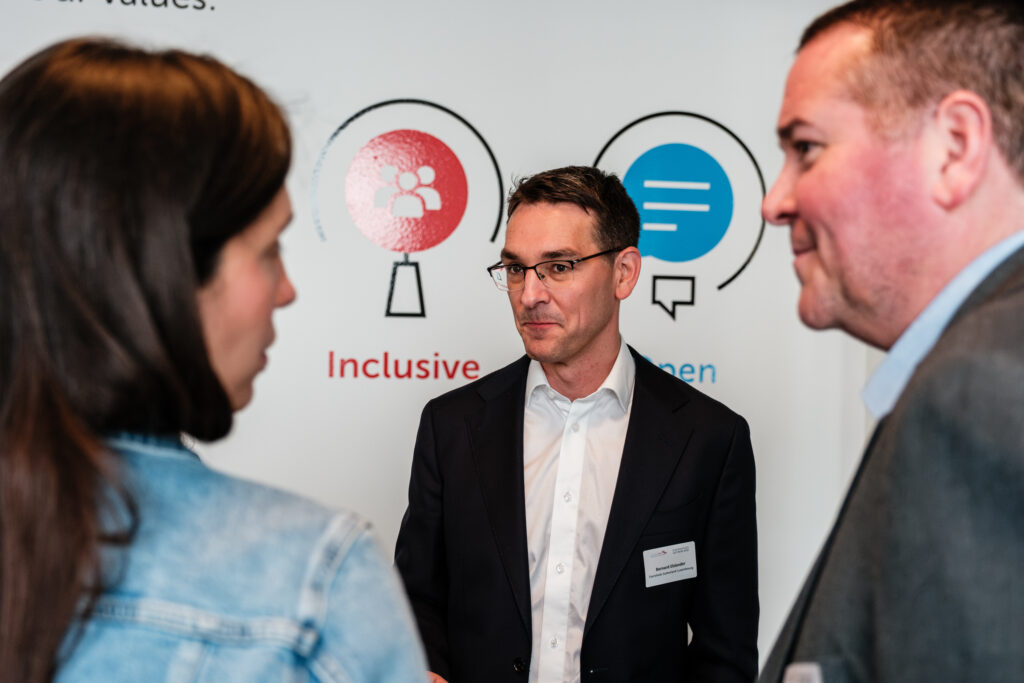
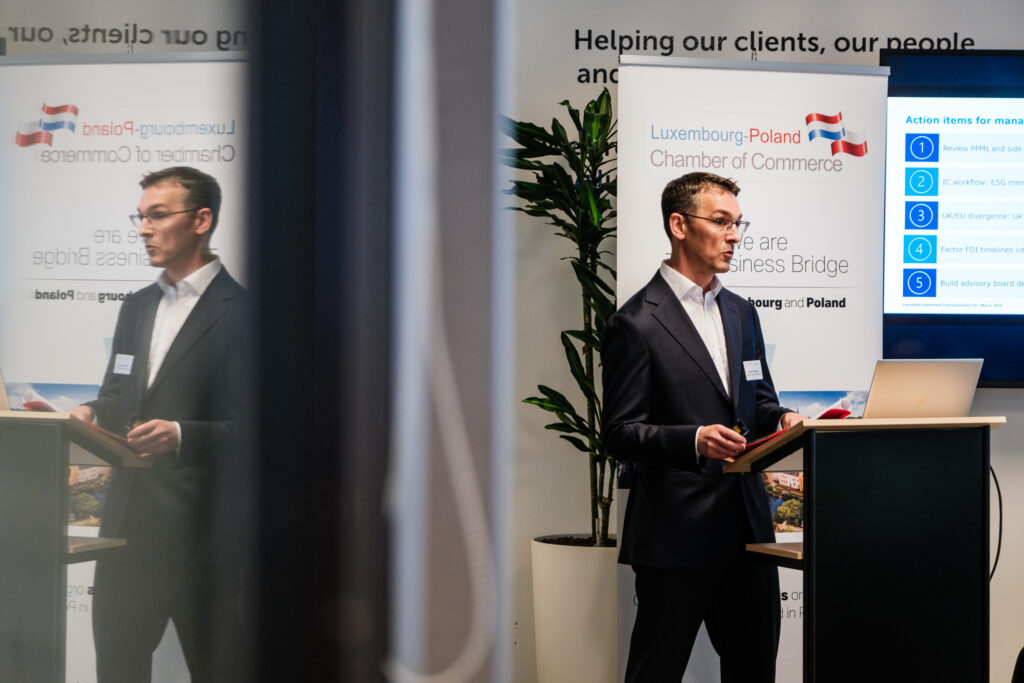
Bernard Elslander and Marc Lasok-Smith explored the unprecedented momentum in defence and venture capital investment, driven by €800 billion under ReArm Europe and the NATO Innovation Fund based in Luxembourg, with Poland emerging as CEE’s defence tech hub. They walked participants through the three overlapping regulatory regimes — FDI screening, export controls and sanctions, and national security clearances — that converge on defence deals, highlighting in particular the new EU FDI Screening Regulation (February 2026), which now requires all 27 Member States to screen investments, extends scope to EU subsidiaries of non-EU investors, and introduces mandatory cross-border cooperation. On the structuring side, they demonstrated how Luxembourg vehicles — notably the RAIF SCA under the “risk capital” regime (CSSF Circular 25/901) and SCSps — offer speed, flexibility and no diversification requirement, making them well suited for defence and dual-use VC strategies. They also addressed ESG compatibility, noting that the Defence Omnibus now limits prohibited weapons to only four categories and that SFDR does not block defence investment provided a proper DNSH assessment is carried out, and encouraged fund managers to review their PPMs and side letters and to factor FDI clearance timelines into deal documentation.

Real Assets: Infrastructure, Energy & Data Centres

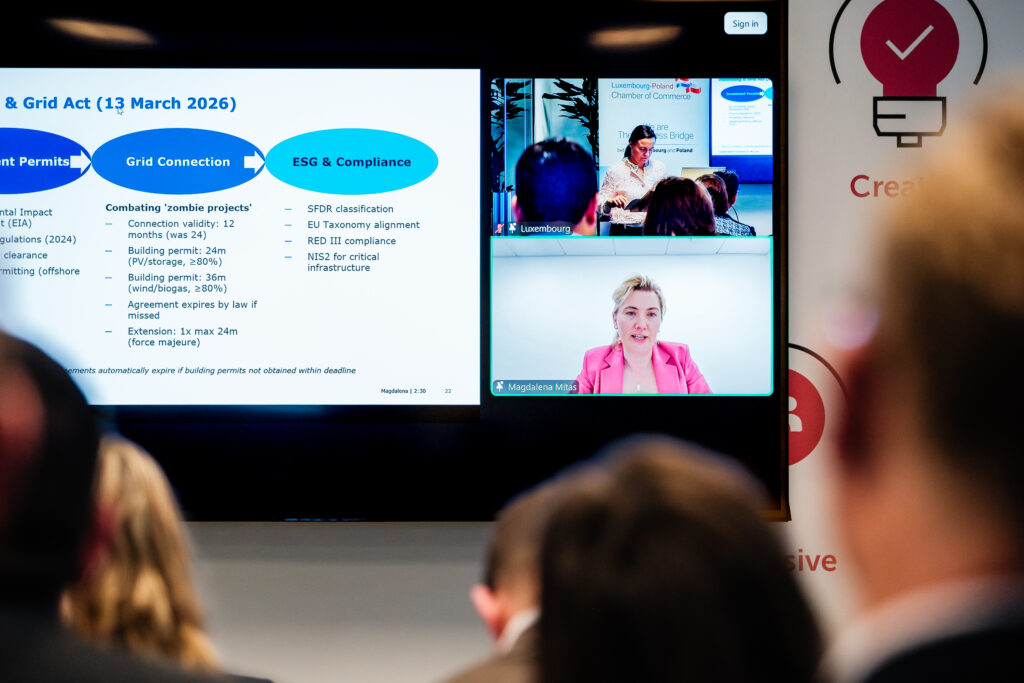
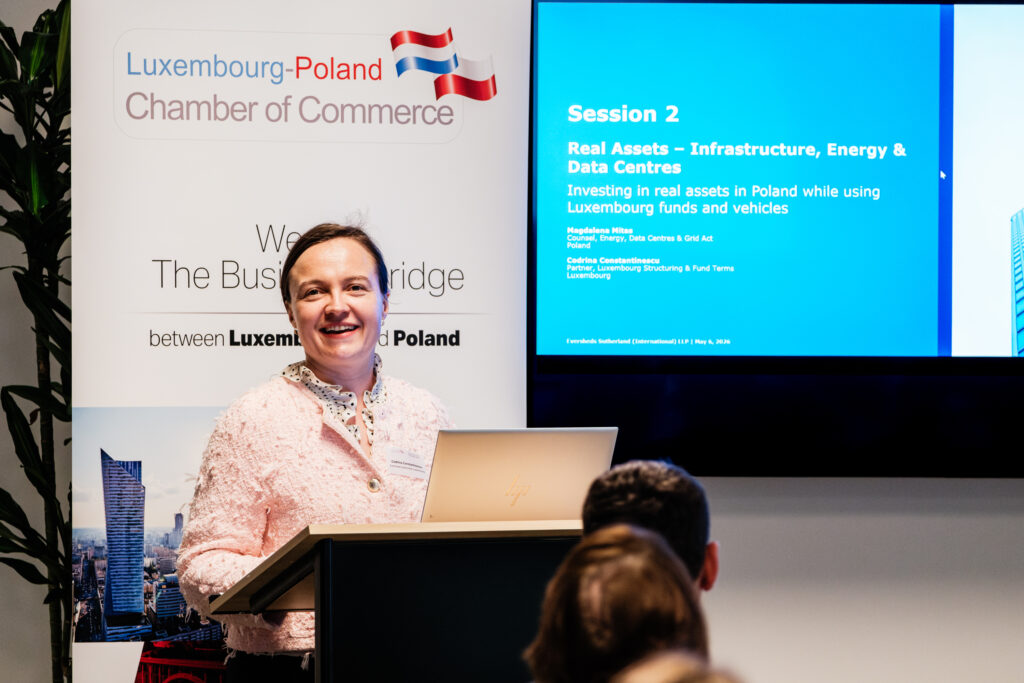
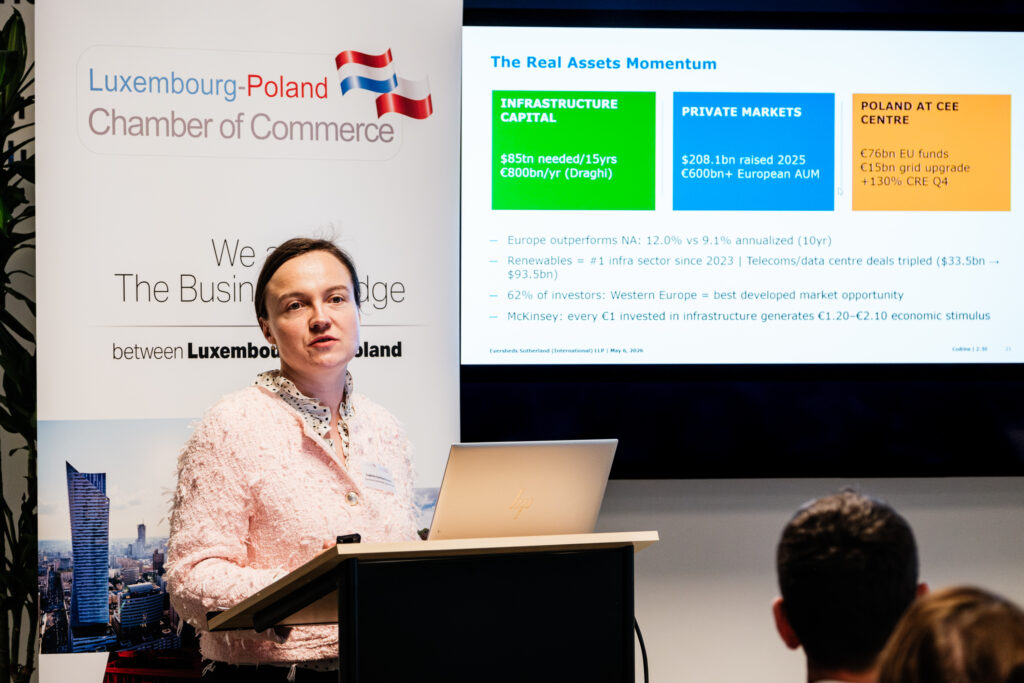
Magdalena Mitas and Codrina Constantinescu focused on Poland’s position as the largest infrastructure market in CEE, supported by €76 billion in EU funds and a €15 billion grid upgrade programme, at a time when Europe outperforms North America in infrastructure returns and private infrastructure fundraising reached $208.1 billion globally in 2025. Magdalena Mitas presented the Polish Grid Act of 13 March 2026, which fundamentally changes the risk profile for energy investors by introducing milestone-based connection agreements that automatically expire if building permits are not obtained within strict deadlines, doubling advance payments to PLN 60k/MW and introducing mandatory collateral requirements. She also highlighted data centres as a fast-growing asset class, with over 120 facilities in Poland and Warsaw positioning itself as an alternative to traditional FLAPD markets, benefiting from new flexible and customisable grid connection options under the Grid Act. The latter was associated with environmental and spatial development regulatory framework related to the development and risk mapping of the projects. Codrina Constantinescu then presented the Luxembourg structuring toolbox, showing how the RAIF under SIF-like or SICAR-like regimes or the UCI Part II, combined with the ELTIF 2.0 retail passport — with 161 ELTIFs already in Luxembourg — offers optimal vehicles for diversified infrastructure portfolios, with up to 70% concentration in a single infrastructure asset for well-informed investors under CSSF 25/901.

Public Procurement Remedies in Poland

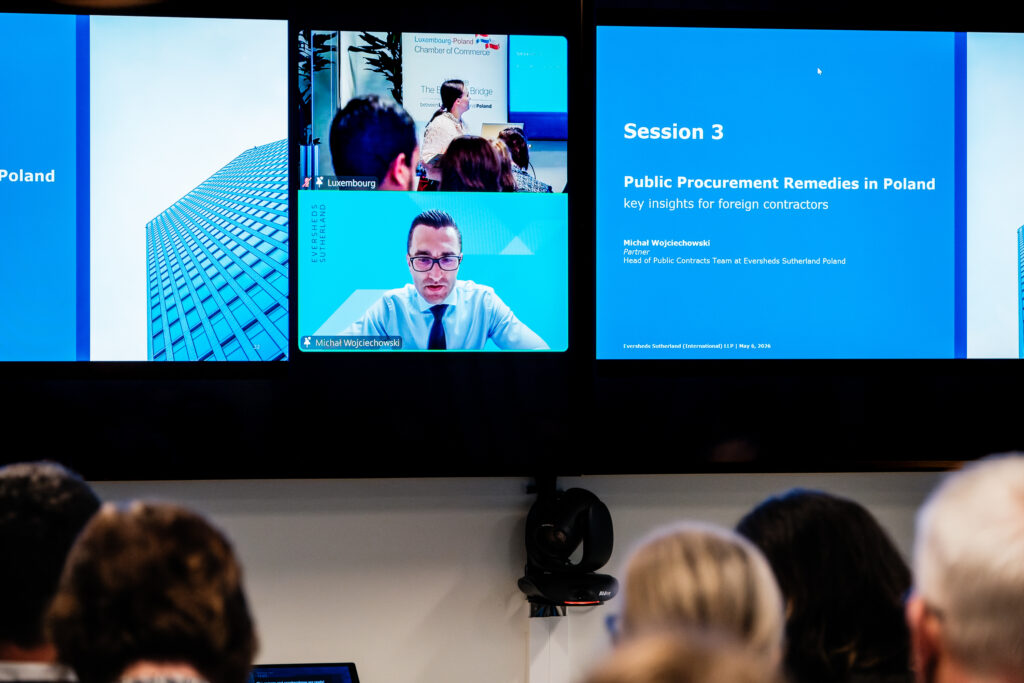
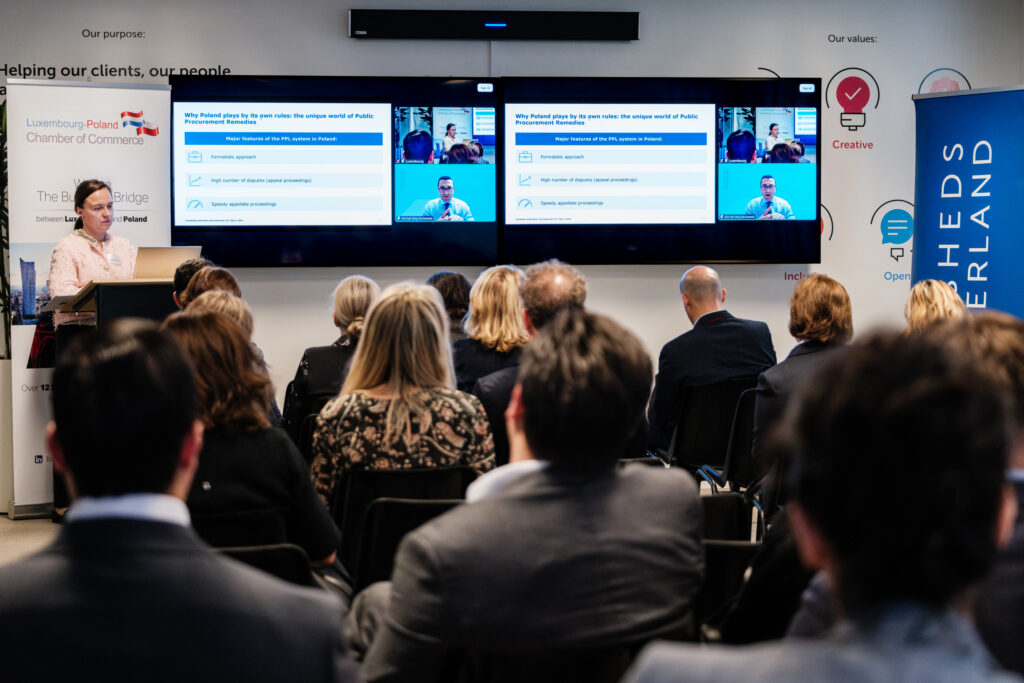
Michał Wojciechowski provided key insights into Poland’s public procurement market, representing over €175 billion in opportunities across transport, energy, defence, digital transformation and healthcare, fuelled by the National Recovery Plan (€59.8 billion), EU Cohesion Policy 2021–2027 (€76 billion) and a national defence budget supplemented by expected SAFE instrument. He highlighted the distinctive features of the Polish public procurement remedies system, characterised by a highly formalistic approach combined with remarkably swift appellate proceedings, with judgments typically issued within approximately 20 days from appeal filing. Poland leads Europe in procurement disputes, with 5,986 appeals filed in 2025, driven by divergent case law, low court fees and the possibility to appeal electronically. Michał underlined that the system imposes very tight deadlines, requiring parties to work under significant time pressure. The best example is a recently introduced legal amendment, which obliges parties joining an appeal proceeding to submit their substantive position together with supporting evidence within only three days, which is the shortest procedural deadline in the entire Polish legal system.

Luxembourg Fund Taxation 2026

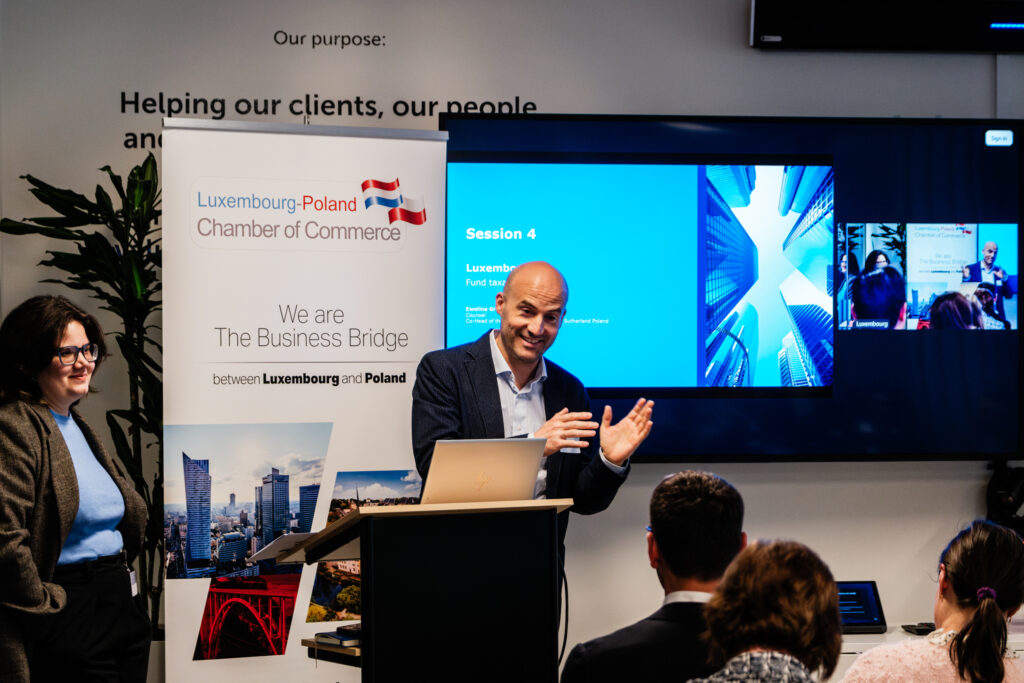
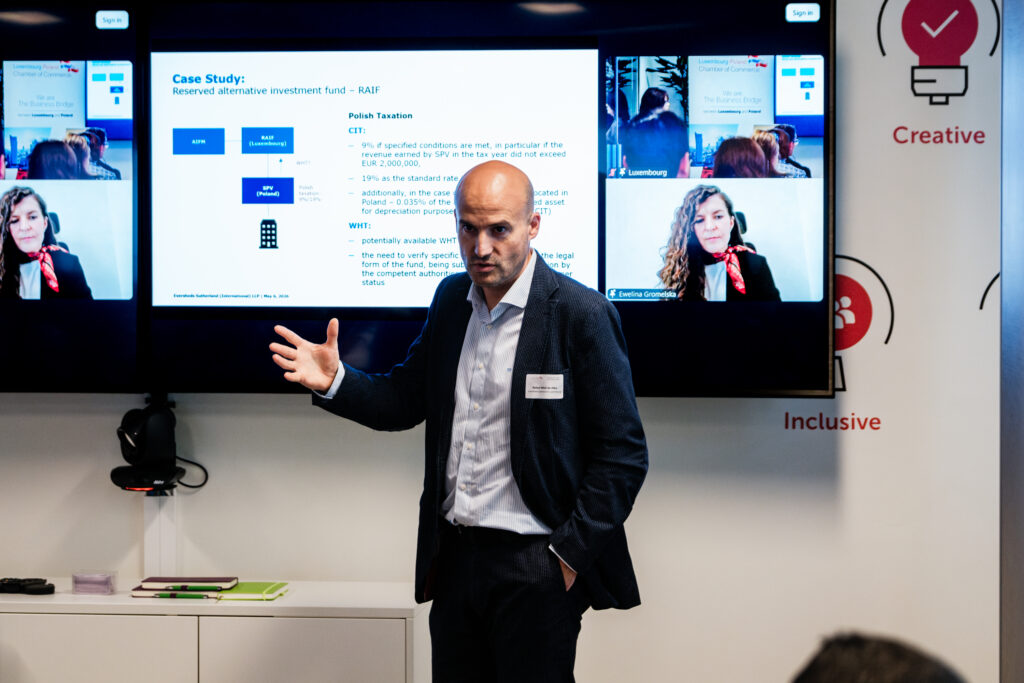
Ewelina Gromelska discussed the key tax preferences available to foreign investment funds deriving income in Poland, including the CIT fund exemption, reduced withholding tax rates under double taxation treaties, and participation exemptions under the Parent-Subsidiary Directive — all subject to specific conditions and requiring analysis in light of the beneficial ownership guidelines issued by the Polish Minister of Finance in July 2025. She highlighted the favourable amendments to the Polish CIT Act effective 1 January 2026, which aligned the fund exemption with CJEU case law and opened WHT recovery opportunities for past periods, and presented a practical case study on the taxation of a RAIF investing in Poland through an SPV. Rafael Mol de Alba and Myrto Archontaki complemented this analysis from the Luxembourg perspective by examining the tax regimes applicable to RAIFs operating under the SIF regime and SICARs, as well as the key considerations for structuring investments between Luxembourg and Poland, showing how these Luxembourg vehicles interact with the Polish tax framework to provide an efficient cross-border investment platform.

Strengthening cross-border investment dialogue

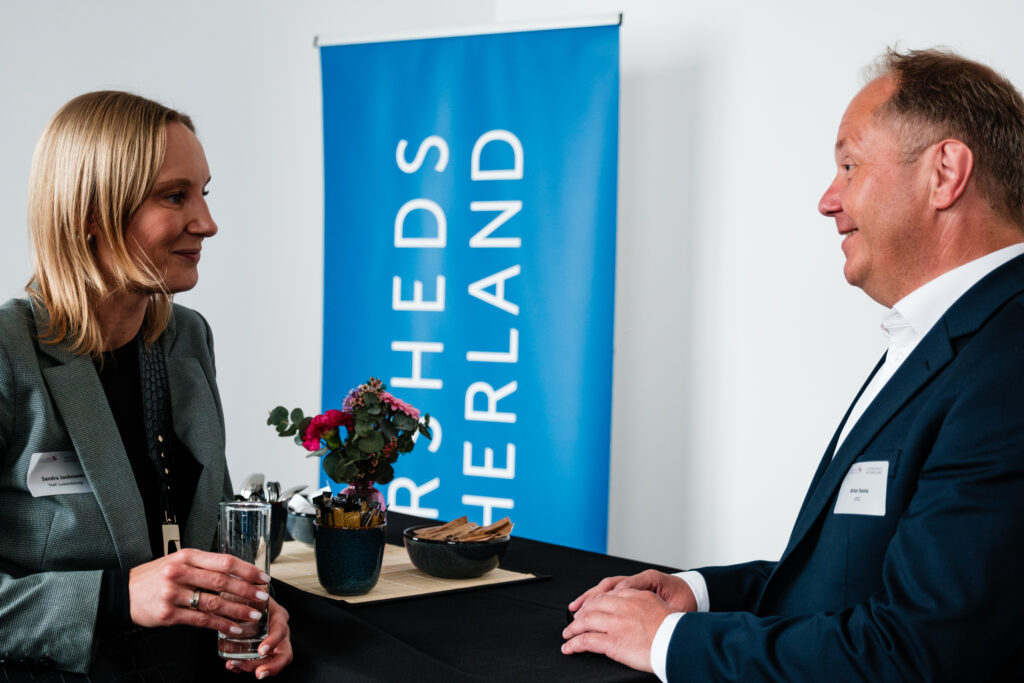
The official programme was followed by a networking session, allowing participants to continue discussions and exchange perspectives in a more informal setting.

The event reaffirmed Luxembourg’s role as a leading European hub for investment structuring and highlighted the importance of aligning legal, regulatory, tax and strategic considerations when designing fund structures for both institutional and private capital investing in Poland’s dynamic private capital and real assets markets.
LPCC would like to thank Eversheds Sutherland for organising and hosting the event, as well as all speakers and participants for their valuable contributions.
__________

The Luxembourg-Poland Chamber of Commerce continues to serve as the premier platform for fostering business relationships between Poland and Luxembourg. If you’re interested in joining our community and participating in future events, contact us at info@lpcc.lu.
More about membership options you will find here.

    Etiam magna arcu, ullamcorper ut pulvinar et, ornare sit amet ligula. Aliquam vitae bibendum lorem. Cras id dui lectus. Pellentesque nec felis tristique urna lacinia sollicitudin ac ac ex. Maecenas mattis faucibus condimentum. Curabitur imperdiet felis at est posuere bibendum. Sed quis nulla tellus.

    ADDRESS

    63739 street lorem ipsum City, Country

    PHONE

    +12 (0) 345 678 9

    EMAIL

    info@company.com

    X